
Main Stage
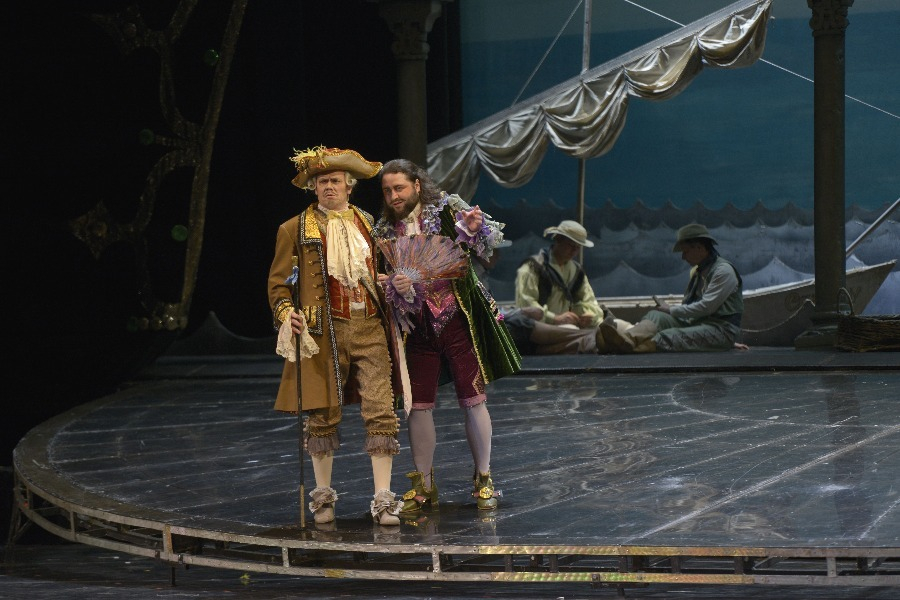
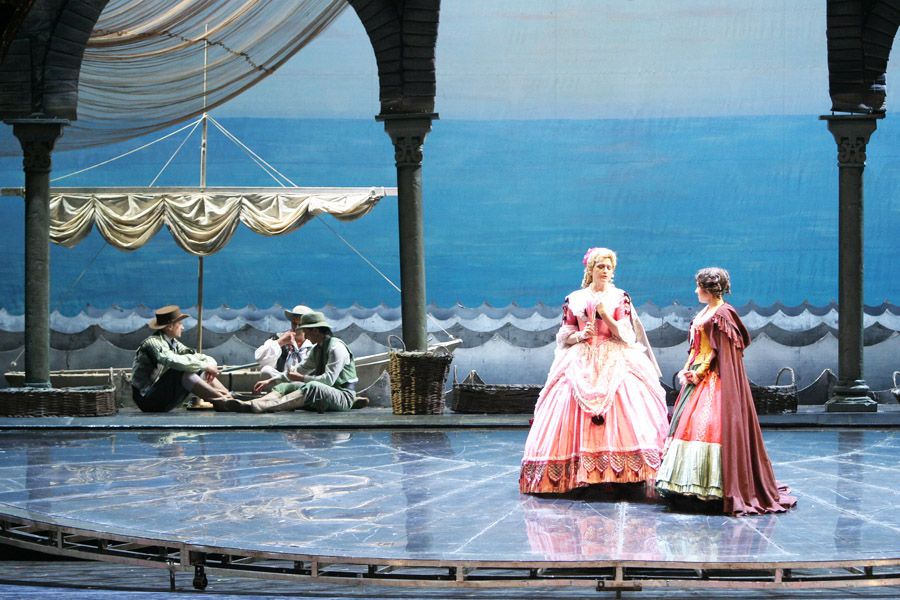
Performed in Russian, with syncronized English supertitles The performance has 2 intermissions Libretto by the composer and Mira Mendelson, after the play The Duenna by Richard Brinsley Sheridan Musical Director: Valery Gergiev Betrothal in a Monastery is an opera that has only briefly left the Kirov Theatre's repertoire once since its world premiere in November 1946. Written by Prokofiev in 1940 and initially intended for the Stanislavsky Theatre in Moscow, it was first performed in Leningrad under the title Duenna (Prokofiev himself referred to it as Mendoza in his drafts). Ilya Shlepyanov's witty production, with sets designed by Tatyana Bruni and musical director Boris Khaikin, received enthusiastic reviews from the composer, but its audiences' delight was short-lived: in 1948, following the Party decree "On the Opera 'Great Friendship' by V. Muradeli" and the persecution of Prokofiev, it was removed from the repertoire. A new production was staged in 1961 by Alexei Kireyev. The light and transparent "Betrothal in a Monastery," with sets and costumes by Teodora Schorr and Irina Kustova, is fondly remembered by several generations of Leningrad audiences. The current "Betrothal" (1996) is the third at the Mariinsky Theatre. The only operatic work by director Vladislav Pazi and designer Alla Kozhenkova represents their recognizable style: a lush carnival atmosphere and excessive decorativeness, perfectly suited to Prokofiev's vibrant, joyful music. Prokofiev created "The Duenna" swiftly and easily. The composer wrote the libretto himself, translating from English and adapting Richard Brinsley Sheridan's 1775 play, which, in turn, was also written as a libretto for a comic opera (perhaps hence its archaically precise number structure). Prokofiev filled the text with jokes, comedic scenes, and parodic quotations ("Your lawful wife, I will be faithful to you forever," declares the Duenna to the duped Mendoza in the finale). But he also strengthened the lyrical line, writing luxurious ensembles, captivating serenades, tender ariosos, ariettas, and romances for all the lovers. As befits a comic opera, the action is punctuated by genre numbers: masked dances at a night carnival, a comical private concert at Don Jerome's, and even a musical eccentricity in the finale—a number with accompaniment on glasses. The original 1946 props—the glasses, approved by Prokofiev himself—are still used in the production today. SynopsisAct IIn 18th-century Seville Don Jerome arranges to marry his daughter Louisa to Mendoza, an ugly but very rich old fish merchant who has not seen the girl but is enthusiastic. He hears the penniless Antonio serenading Louisa and vows that the wedding must take place soon. Act IILouise’s duenna hatches a plan that will allow Louisa to marry Antonio and herself to snare Mendoza and his money: Don Jerome must believe that the duenna is acting as a go-between for the lovers; he will then dismiss her but Louisa will put on the duenna’s clothes, escape and elope with Antonio. The duenna, disguised as Louisa, will marry Mendoza instead. Having escaped, Louisa comes across her friend Clara who, feigning distress at her lover’s over-ardent behavior (her lover is Louisa’s brother Ferdinand), has decided to take refuge in a monastery. Disguised, this time as Clara, Louisa enlists Mendoza’s help in finding Antonio – the merchant is only too pleased to divert his rival’s attentions away from Louisa (as he thinks). At Don Jerome’s house Mendoza meets ‘Louisa’ (the duenna); he is won over by her flattery and the couple plan to elope. Act IIIAntonio meets the real Louisa and Mendoza, still ignorant of her identity, smiles on young love. Don Jerome, interrupted in his amateur music making, unwittingly blesses the separate marriages of Louisa and Mendoza. At the concert Clara pines for Ferdinand. Act IVA visit from Mendoza and Antonio interrupts the joyous feasting of the monks at the monastery. Ferdinand also arrives and, believing that Antonio is about to marry Clara, stars a fight. Confusions are resolved and the monks bless all three marriages. At the wedding ball planned for Louisa, Don Jerome learns of the turn of events and is eventually reconciled to them; his daughter has married a pauper, but Ferdinand has married an heiress. | ||||||||||